
South Florida’s Weed Challenges
Weeds giving your South Florida lawn an unwanted makeover? You’re definitely not alone. South Florida’s year-round warm climate, abundant rainfall, and unique soil conditions create the perfect storm for persistent weed problems. Unlike northern climates where winter provides natural weed control, South Florida homeowners face continuous weed pressure throughout the year.
This comprehensive guide will help you identify the most problematic weeds in South Florida lawns, understand why they thrive in our region, and provide proven strategies to eliminate and prevent them. From the notorious dollarweed to the painful sandspurs, we’ll cover every major weed that threatens your pristine lawn.
If weeds keep coming back no matter what you spray, thin turf is usually the real problem. Our lawn treatment programs pair targeted weed control with lawn fertilization that thickens the canopy, and when a yard is too far gone, vegetation removal and soil prep followed by new sod is often the faster fix.
Why South Florida is a Weed Paradise
- Year-round growing season allows weeds to germinate and establish in any month
- High humidity and rainfall favor moisture-loving species like dollarweed and nutsedge
- Sandy soils that drain quickly can stress grass while favoring drought-tolerant weeds
- Frequent soil disturbance from construction and storms creates weed opportunities
- Varying microclimates from coastal to inland areas support diverse weed species
The Three Categories of South Florida Weeds
Broadleaf Weeds: Have wide leaves with net-like veins and typically produce showy flowers. Examples include dollarweed, spurge, and beggarweed.
Grassy Weeds: Resemble grass with narrow leaves and parallel veins but are unwanted species. Examples include crabgrass, goosegrass, and dallisgrass.
Sedge Weeds: Have triangular stems (roll between fingers to feel three sides) and grass-like appearance. Yellow nutsedge is the most problematic in South Florida.
Major Broadleaf Weeds in South Florida
Dollarweed (Pennywort)
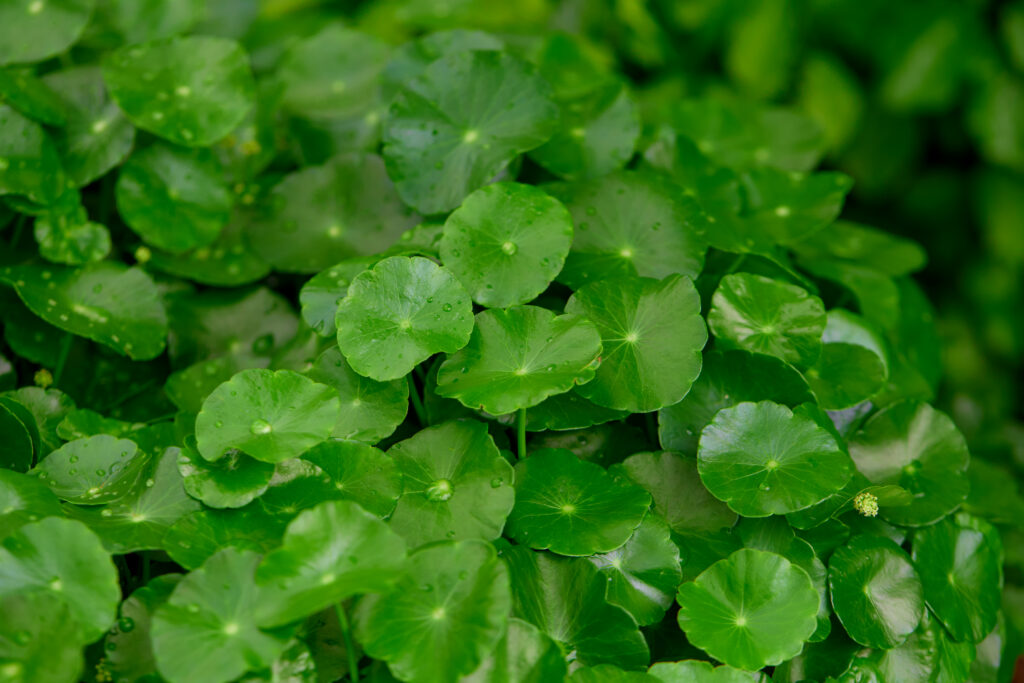
Scientific Name: Hydrocotyle spp.
Peak Season: Year-round, worst during wet season (May-October)
What Dollarweed Looks Like: Dollarweed features perfectly round, shiny leaves that resemble silver dollars or small lily pads, typically 1-2 inches in diameter. The leaves have scalloped edges and a glossy, waxy appearance. This perennial can actually float during flooding conditions, making it incredibly resilient during South Florida’s wet season.
Why It’s a Major Problem in South Florida:
- Indicator of overwatering – its presence signals drainage or irrigation issues
- Thrives in high humidity common throughout the region
- Spreads through multiple methods – rhizomes, tubers, and seeds
- Can survive flooding by floating on water surfaces
- Rapid colonization of weak or stressed turf areas
How to Control Dollarweed:
- Prevention: Fix drainage problems and reduce watering frequency; water deeply but less often
- Removal: Use selective broadleaf herbicides labeled for dollarweed; repeat applications necessary
- Pro Tips: Addressing the moisture issue is crucial – dollarweed will return if underlying drainage problems persist
Spurge (Spotted Spurge)
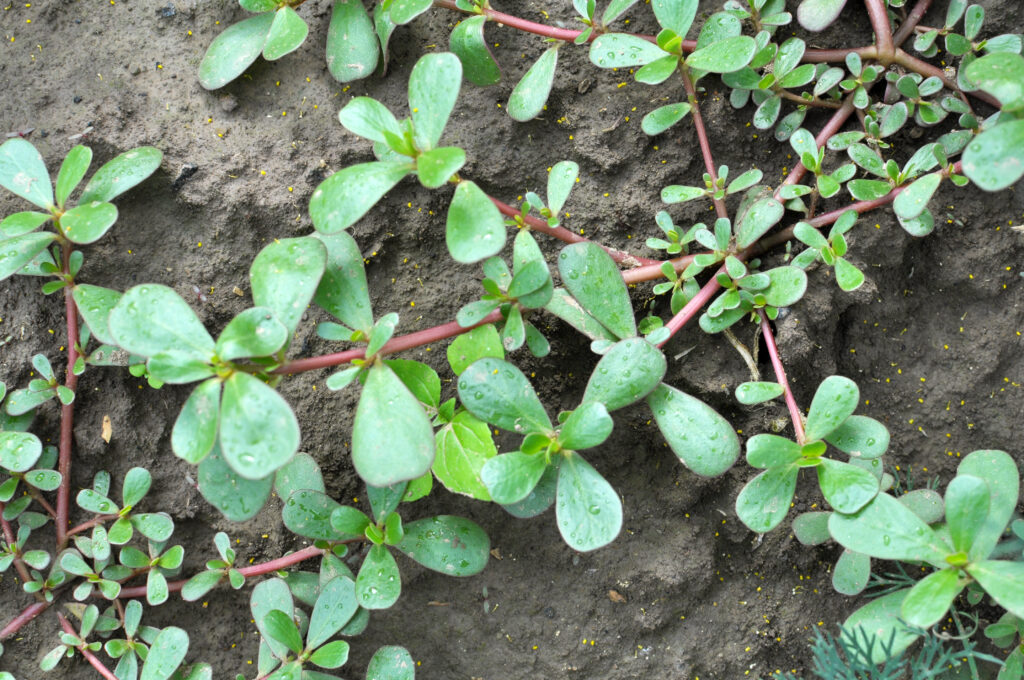
Scientific Name: Euphorbia maculata
Peak Season: March through October
What Spurge Looks Like: This fast-spreading annual grows flat against the ground with small, oval leaves arranged oppositely on reddish stems. Key identifying features include the distinctive brown or reddish spot on many leaves and the milky white sap that appears when stems are broken. Forms dense mats that can quickly cover large areas.
Why It’s a Major Problem in South Florida:
- Thrives in hot, dry conditions when St. Augustine grass is stressed
- Rapid growth and spread can cover significant lawn areas quickly
- Prolific seed production ensures return each season
- Tolerates poor soils where grass struggles
- Mat-forming habit smothers surrounding grass
How to Control Spurge:
- Prevention: Apply pre-emergent herbicides in early spring (February-March)
- Removal: Spot-treat with broadleaf herbicides when weeds are young and actively growing
- Pro Tips: Wear gloves when hand-pulling due to irritating sap; improve soil conditions to favor grass over spurge
Virginia Buttonweed

Scientific Name: Diodia virginiana
Peak Season: April through September
What Virginia Buttonweed Looks Like: This aggressive perennial has lance-shaped leaves arranged in opposite pairs, connected by a distinctive membrane across the stem area. Produces small, white, four-petaled, star-shaped flowers throughout summer that mature into seed pods. Forms dense, spreading mats through both above-ground stems and underground roots.
Why It’s a Major Problem in South Florida:
- Considered the most invasive broadleaf weed in the Southeast
- Dual reproduction through both seeds and extensive root system
- Deep root system makes hand-pulling ineffective
- Tolerates mowing and continues spreading
- Forms dense mats that completely crowd out grass
How to Control Virginia Buttonweed:
- Prevention: Maintain thick, healthy turf density to prevent establishment
- Removal: Multiple applications of selective broadleaf herbicides required
- Pro Tips: Focus on herbicide control rather than hand-pulling; may require professional treatment for severe infestations
Florida Beggarweed

Scientific Name: Desmodium incanum
Peak Season: Year-round in South Florida
What Florida Beggarweed Looks Like: This perennial grows with three leaflets per stem (trifoliate) with fine hairs covering all plant parts. Produces small pink to purple pea-like flowers. The most distinctive feature is its seed pods covered with microscopic hooks that stick like Velcro to anything that brushes against them – clothing, pet fur, mowing equipment, etc.
Why It’s a Major Problem in South Florida:
- Velcro-like seed dispersal leads to rapid spread across properties
- Can regrow from stem fragments that root in soil
- Extensive taproot system makes removal challenging
- Sticky seeds contaminate equipment and spread to new areas
- Forms dense colonies that displace desirable vegetation
How to Control Florida Beggarweed:
- Prevention: Avoid mowing when seeds are present; clean equipment after use in infested areas
- Removal: Hand-pull carefully removing entire taproot; use selective broadleaf herbicides
- Pro Tips: Remove seeds from clothing and pets immediately to prevent spread; timing of mowing is critical
Florida Pusley

Scientific Name: Richardia scabra
Peak Season: May through September
What Florida Pusley Looks Like: This summer annual produces small, white, star-shaped flowers in clusters at stem ends. Has rough, hairy leaves with prominent veins and forms low-growing, branching mats. Specifically targets thin or bare spots in lawns where competition from grass is minimal.
Why It’s a Major Problem in South Florida:
- Rapid establishment in weak turf areas
- Prolific seed production can create thousands of seeds per plant
- Heat and drought tolerance allows survival in stressed lawn conditions
- Dense mat formation prevents grass recovery in affected areas
How to Control Florida Pusley:
- Prevention: Maintain thick, healthy turf through proper fertilization and irrigation
- Removal: Hand-pull small infestations; use broadleaf herbicides for larger areas
- Pro Tips: Address underlying turf health issues to prevent recurrence in bare spots
White Clover
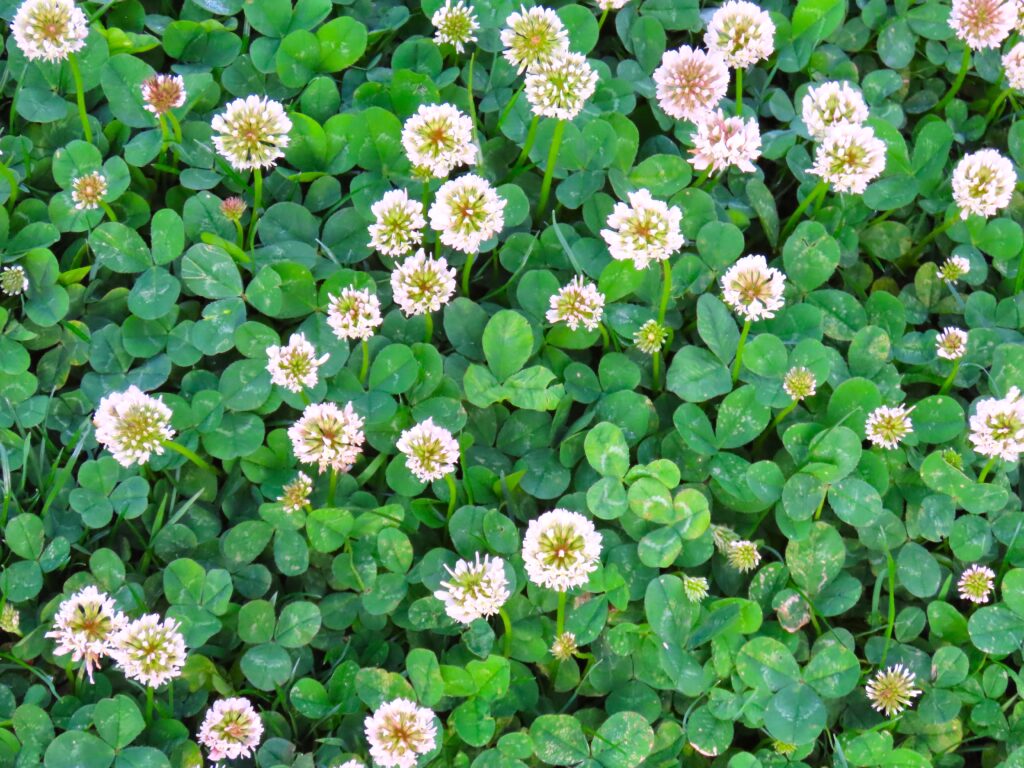
Scientific Name: Trifolium repens
Peak Season: October through May (cool season preference)
What White Clover Looks Like: Features the classic three-leaflet pattern with each leaflet having a distinctive white or light green V-shaped “watermark.” Produces small white or pale pink flowers in spherical clusters. Spreads through creeping stems that root at nodes.
Why It’s a Major Problem in South Florida:
- Indicates nutrient deficiencies particularly nitrogen in soil
- Aggressive spreading through rooting runners
- Competes directly with grass for space and nutrients
- Attracts bees which can be problematic for some homeowners
How to Control White Clover:
- Prevention: Regular fertilization to maintain optimal nitrogen levels
- Removal: Selective broadleaf herbicides during active growth periods
- Pro Tips: Clover presence often indicates low soil nitrogen – soil testing recommended
Yellow Woodsorrel

Scientific Name: Oxalis stricta
Peak Season: Year-round in South Florida
What Yellow Woodsorrel Looks Like: Has distinctive heart-shaped leaves in groups of three, resembling clover but with distinctly heart-shaped leaflets. Produces bright yellow five-petaled flowers. Leaves often turn burgundy-red during summer heat. Can grow upright to 15 inches or remain low under mowing.
Why It’s a Major Problem in South Florida:
- Explosive seed dispersal can launch seeds up to 12 feet
- Year-round growth in South Florida’s climate
- Rapid colonization through underground stems and prolific seeding
- Tolerates various conditions from sun to shade
How to Control Yellow Woodsorrel:
- Prevention: Maintain healthy, thick turf; improve soil fertility
- Removal: Hand-pull including entire root system before flowering; selective herbicides
- Pro Tips: Remove before seed pods mature to prevent explosive seed dispersal
Broadleaf Plantain

Scientific Name: Plantago major
Peak Season: Year-round, peak growth spring and fall
What Broadleaf Plantain Looks Like: Forms distinctive rosettes of large, oval, dark green leaves with prominent parallel veins and wavy edges. Produces characteristic “rat-tail” seed spikes with tiny flowers. Leaves can reach 6 inches long and 4 inches wide with purple-tinged leaf stems.
Why It’s a Major Problem in South Florida:
- Thrives in compacted soil common in high-traffic areas
- Extremely prolific seeding up to 14,000 seeds per plant
- Deep taproot makes complete removal difficult
- Tolerates foot traffic and mowing
How to Control Broadleaf Plantain:
- Prevention: Reduce soil compaction through aeration; improve drainage
- Removal: Hand-pull including entire taproot; selective broadleaf herbicides
- Pro Tips: Address soil compaction issues to prevent reestablishment
Bull Thistle

Scientific Name: Cirsium vulgare
Peak Season: Biennial – rosette year one, flowering year two
What Bull Thistle Looks Like: This biennial starts as a spiny rosette of large, deeply-lobed leaves in the first year. In the second year, develops into a tall woody stalk (2-6 feet) topped with purple-rose flowers. All parts of the plant have sharp spines making it painful and dangerous to handle.
Why It’s a Major Problem in South Florida:
- Dangerous spines make lawn maintenance hazardous
- Forms dense thickets that crowd out all other vegetation
- Wind-dispersed seeds can spread over large distances
- Deep taproot makes removal challenging
How to Control Bull Thistle:
- Prevention: Maintain thick turf to prevent seedling establishment
- Removal: Cut below crown before flowering; post-emergent herbicides during flowering
- Pro Tips: Always wear protective clothing when handling; timing is critical for effective control
Chickweed

Scientific Name: Stellaria media
Peak Season: December through April (winter annual)
What Chickweed Looks Like: Forms small mounds with egg-shaped leaves that end in points. Produces small, white, daisy-like flowers with deeply notched petals. One identifying feature is a single line of hairs running down one side of the stem. Grows in dense, spreading mats.
Why It’s a Major Problem in South Florida:
- Extremely adaptable to various soil and moisture conditions
- Tolerates foot traffic and mowing pressure
- Dense mat formation excludes grass establishment
- Cool season growth when many herbicides are less effective
How to Control Chickweed:
- Prevention: Pre-emergent herbicides in early fall before germination
- Removal: Hand-pull small patches; selective herbicides for larger infestations
- Pro Tips: Best controlled during active growth in winter months
Major Grassy Weeds in South Florida
Crabgrass
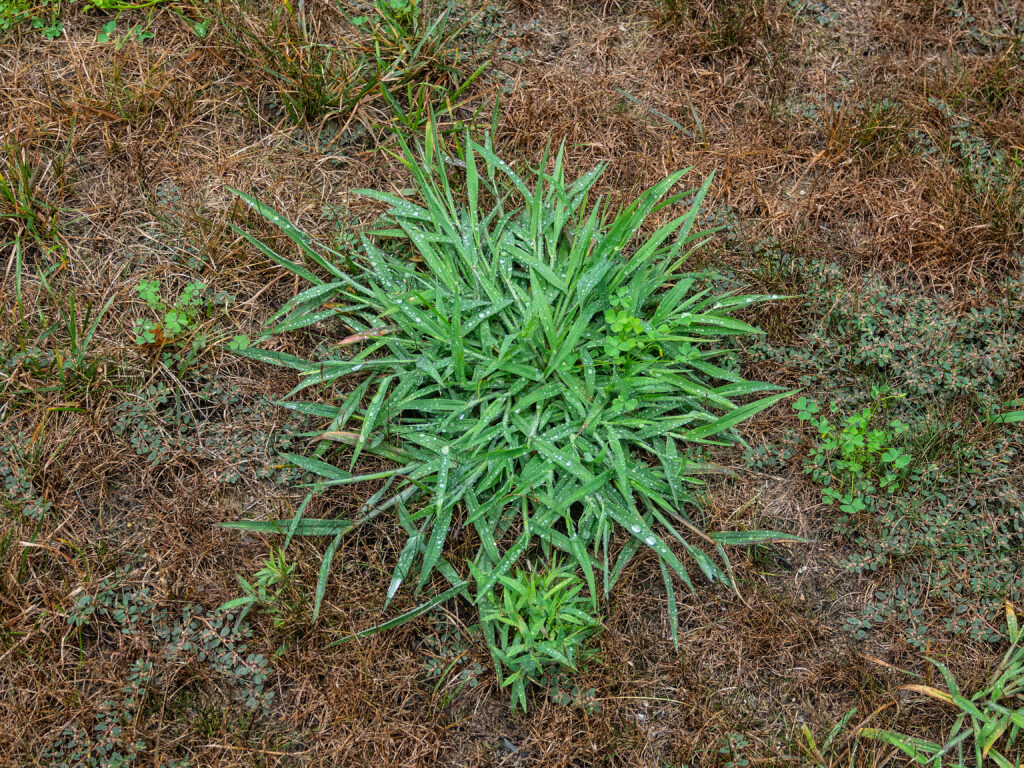
Scientific Name: Digitaria spp.
Peak Season: March through October
What Crabgrass Looks Like: This summer annual grows low to the ground with light green, coarse-textured blades that branch out from a central point like crab legs. Leaf blades are flat, 2-5 inches long, and taper to a point. Often appears in thin, heat-stressed lawn areas and produces distinctive finger-like seed heads in late summer.
Why It’s a Major Problem in South Florida:
- Prolific seed production up to 150,000 seeds per plant
- Rapid establishment in stressed or thin turf areas
- Heat and drought tolerance gives it advantage over cool-season grasses
- Annual life cycle but persistent seed bank ensures yearly return
How to Control Crabgrass:
- Prevention: Apply pre-emergent herbicides February-March; maintain thick turf canopy
- Removal: Post-emergent herbicides most effective on young, actively growing plants
- Pro Tips: Prevention is far more effective than post-emergent control; timing is critical
Goosegrass

Scientific Name: Eleusine indica
Peak Season: April through October
What Goosegrass Looks Like: This summer annual has a coarse, bunch-type growth with dark green leaves and distinctive silver-white coloration toward the plant center. Produces characteristic “zipper-like” seed heads with 2-10 finger-like spikes. Leaves can grow up to 12 inches long and appear folded or flat.
Why It’s a Major Problem in South Florida:
- Thrives in compacted soil common in high-traffic areas
- Late germination (3-4 weeks after crabgrass) catches homeowners off-guard
- Prolific seeding up to 50,000 seeds per plant
- Tolerates low mowing heights and foot traffic
How to Control Goosegrass:
- Prevention: Apply pre-emergent herbicides late March-April (later than crabgrass timing)
- Removal: Very difficult with post-emergent herbicides; focus on prevention
- Pro Tips: Reduce soil compaction through aeration; adjust pre-emergent timing for goosegrass
Dallisgrass

Scientific Name: Paspalum dilatatum
Peak Season: Year-round perennial, peak growth spring-summer
What Dallisgrass Looks Like: This non-native perennial forms distinctive clumps with coarse-textured, broad, flat leaves. Produces tall, dark seed heads that appear black and tufted when mature – these stand well above the lawn canopy making infestations obvious.
Why It’s a Major Problem in South Florida:
- Clumping growth habit creates unsightly patches in smooth lawns
- Deep root system makes removal challenging
- Aggressive spread through seeds and tillers
- Competitive advantage in wet areas common during rainy season
How to Control Dallisgrass:
- Prevention: Maintain healthy, dense turf; three-pronged approach with cultural practices
- Removal: Combination of pre-emergent and post-emergent herbicides needed
- Pro Tips: Complete control often requires multiple seasons of integrated management
Torpedograss

Scientific Name: Panicum repens
Peak Season: Year-round perennial, most aggressive spring-summer
What Torpedograss Looks Like: This perennial has narrow, pointed leaf blades and forms dense, mat-like stands through an extensive underground rhizome system. Considered one of the world’s most invasive grasses due to its aggressive spreading ability and drought tolerance once established.
Why It’s a Major Problem in South Florida:
- Extremely invasive with classification as one of world’s worst weeds
- Deep, extensive rhizomes can spread rapidly underground
- Herbicide resistance makes control very challenging
- Forms monocultures excluding all other vegetation
How to Control Torpedograss:
- Prevention: Early detection and immediate action critical
- Removal: May require professional treatment with specialized herbicides
- Pro Tips: Often requires multiple years of intensive management; prevent establishment at all costs
Sedge Weeds in South Florida
Yellow Nutsedge

Scientific Name: Cyperus esculentus
Peak Season: March through October
What Yellow Nutsedge Looks Like: This aggressive perennial has bright yellow-green, grass-like leaves that grow noticeably faster than surrounding turf. The key identifier is its triangular stem – roll it between your fingers to feel the three distinct sides. Produces yellow, spiky flower clusters and typically grows 12-16 inches tall.
Why It’s a Major Problem in South Florida:
- Underground tuber system survives 8-14 inches deep in soil
- Regenerates from small tuber fragments making complete removal nearly impossible
- Thrives in wet conditions common during South Florida’s rainy season
- Grows faster than grass making infestations obvious
- Resistant to many herbicides due to waxy leaf coating
How to Control Yellow Nutsedge:
- Prevention: Improve drainage; avoid overwatering; nutsedge indicates moisture problems
- Removal: Specialized sedge herbicides containing halosulfuron-methyl or sulfentrazone
- Pro Tips: Multiple treatments required; may take 2-3 years for complete control due to deep tubers
Purple Nutsedge

Scientific Name: Cyperus rotundus
Peak Season: April through September
What Purple Nutsedge Looks Like: Similar to yellow nutsedge but typically shorter (under 6 inches), with darker green leaves and purple-tinged flower heads. Also has triangular stems and forms colonies through underground tubers and rhizomes.
Why It’s a Major Problem in South Florida:
- Even more aggressive than yellow nutsedge
- Dense tuber network can extend several feet underground
- Rapid colonization through both tubers and rhizomes
- Later emergence than yellow nutsedge extends control season
How to Control Purple Nutsedge:
- Prevention: Similar to yellow nutsedge – focus on drainage improvement
- Removal: Same specialized herbicides as yellow nutsedge
- Pro Tips: Often requires different timing than yellow nutsedge control
Other Problematic South Florida Weeds
Sandspurs (Sandburs)

Scientific Name: Cenchrus spp.
Peak Season: Spring emergence, burs develop late summer
What Sandspurs Look Like: This annual grassy weed appears like normal grass in spring but develops extremely painful, thorny burs by late summer. The burs are sharp enough to pierce skin and pet paws making lawns unusable for barefoot activities.
Why It’s a Major Problem in South Florida:
- Painful burs make lawn unusable and dangerous for pets and children
- Burs stick to everything spreading the weed to new areas
- Thrives in sandy soil common throughout South Florida
- Drought tolerance allows survival in stressed lawn areas
How to Control Sandspurs:
- Prevention: Pre-emergent herbicides in early spring; maintain thick turf
- Removal: Hand-pull or treat with herbicides before burs develop
- Pro Tips: Timing is critical – must control before bur development in late summer
Matchweed

Scientific Name: Lippia nodiflora
Peak Season: Year-round, peak growth during wet season
What Matchweed Looks Like: This perennial forms dense mats with small, opposite leaves and creeping stems that root at every node. Produces small purple and white flowers at stem tips that resemble tiny match heads – hence the common name.
Why It’s a Major Problem in South Florida:
- Dense mat formation completely excludes grass growth
- Spreads through rooting stems making removal challenging
- Thrives in moist areas common in South Florida landscapes
- Tolerates mowing and continues spreading
How to Control Matchweed:
- Prevention: Improve drainage in affected areas
- Removal: Selective broadleaf herbicides; hand-pulling requires removing all rooting stems
- Pro Tips: Address moisture issues to prevent reestablishment
Dayflower
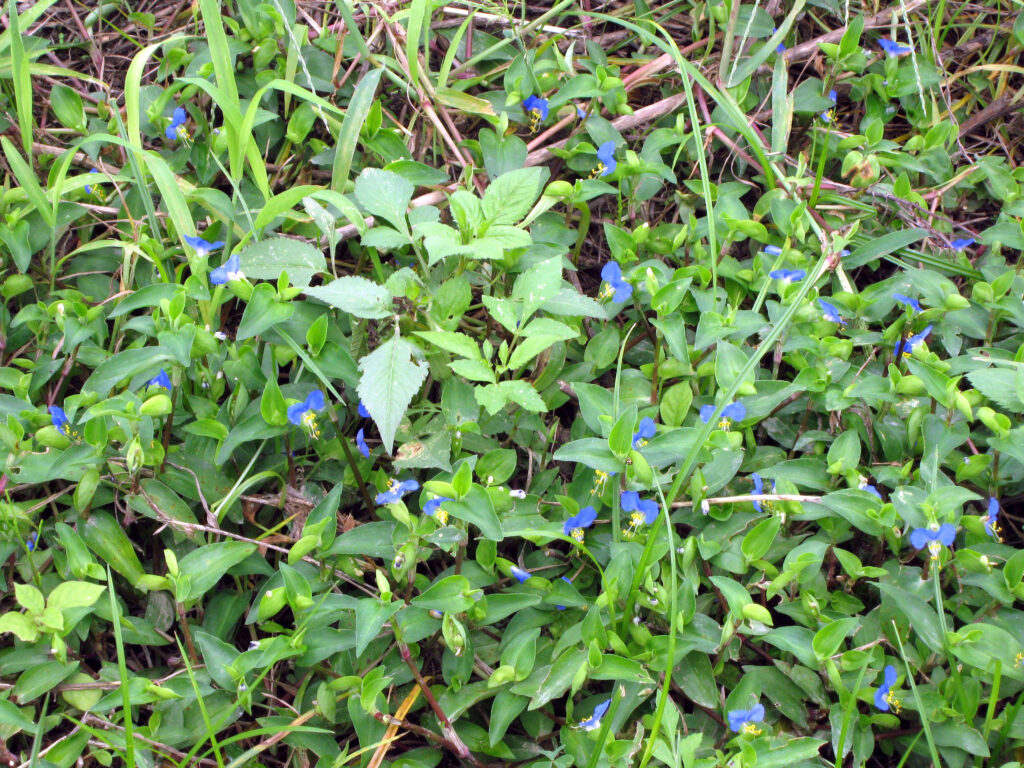
Scientific Name: Commelina diffusa P
eak Season: May through October (wet season)
What Dayflower Looks Like: Recognizable by small blue, three-petaled flowers and lance-shaped, vibrant green leaves. Prefers shaded, damp areas and can form spreading colonies in favorable conditions.
Why It’s a Major Problem in South Florida:
- Thrives in wet season conditions common from May-October
- Aggressive spreading in favorable shade/moisture combinations
- Difficult herbicide penetration due to waxy leaf surface
- Rapid establishment in disturbed soil areas
How to Control Dayflower:
- Prevention: Increase sunlight exposure by trimming overhanging vegetation; improve drainage
- Removal: Selective herbicides with surfactant for better leaf penetration
- Pro Tips: Hand-pulling small infestations before they establish is most effective
Why Weeds Take Over in the First Place
Almost every weed problem in South Florida traces back to thin or weakened turf that leaves open soil. A thick, healthy lawn is the best weed control there is. The most common causes:
- Mowing too low. Scalping exposes soil to sunlight and stresses the grass. Follow recommended mowing heights.
- Frequent, shallow watering, which keeps the surface moist for weed seeds and disease. Water deeply and less often; see our watering guide.
- Compacted or poorly draining soil. See lawn drainage issues.
- Bare and thin spots from chinch bugs, fungus, pet urine, heavy shade or foot traffic.
- Skipping pre-emergent, which gives every seed in the soil a chance to sprout.
- The wrong grass for the conditions. A grass fighting its environment stays thin.
Cool-Season Weeds: What Shows Up in Winter
Cool-season weeds germinate in fall or early winter once nights drop into the mid-50s to low-60s, grow slowly under your turf all winter, then surge in late winter and early spring, setting seed just as your St. Augustine or zoysia wakes up.
The usual suspects are annual bluegrass (Poa annua), chickweed, henbit, clover and lawn burweed (“sticker weed”). Most are annuals, which is good news: break the seed cycle for a couple of seasons and populations drop sharply.
- Apply a fall pre-emergent from late October to mid-November. See pre-emergent timing for spring and fall.
- Spot-treat or hand-pull survivors before they flower and drop seed.
- Keep turf dense through winter so seedlings have nowhere to establish.
South Florida-Specific Management Strategies
Timing Recommendations for South Florida
Pre-emergent Herbicide Applications:
- February 1-15: Primary application for summer annuals (crabgrass, spurge, pusley)
- Late March-April: Secondary application for late germinators (goosegrass)
- October-November: Winter annual control (chickweed, annual bluegrass)
Post-emergent Herbicide Applications:
- March-May: Spring broadleaf weed control during active growth
- September-November: Fall broadleaf weed control when temperatures moderate
- Avoid June-August: Extreme heat stress reduces herbicide effectiveness and increases turf injury risk
Hand-pulling Optimal Times:
- After rainfall: Moist soil makes root removal easier
- Early morning: Cooler temperatures reduce stress on remaining turf
- Before flowering: Prevents seed production and spread
Climate Considerations
Wet Season Challenges (May-October):
- Increased pressure from moisture-loving weeds (dollarweed, nutsedge, doveweed)
- Herbicide applications complicated by frequent rainfall
- Rapid weed establishment in disturbed areas after storms
Dry Season Opportunities (November-April):
- Better herbicide efficacy with reduced rainfall interference
- Drought-tolerant weeds (spurge) may be more susceptible when moisture-stressed
- Optimal timing for major lawn renovation projects
Hurricane Season Impact:
- Soil disturbance creates ideal weed germination conditions
- Debris removal often spreads weed seeds to new areas
- Post-storm recovery period critical for preventing weed establishment
Soil-Specific Strategies
Sandy Soil Management:
- Drainage advantage: Reduces problems with moisture-loving weeds
- Nutrient leaching: Requires more frequent, lighter fertilization to maintain grass health
- Compaction issues: High-traffic areas need regular aeration
Compacted Soil Areas:
- Target weeds: Goosegrass, plantain thrive in compacted conditions
- Solutions: Regular aeration, reduced traffic, proper fertilization
- Prevention: Address compaction before weed problems develop
pH Variations:
- Acidic soils: May favor certain weeds over St. Augustine grass
- Alkaline soils: Can create nutrient deficiencies allowing weed competition
- Solution: Regular soil testing and appropriate amendments
Integrated Pest Management Approach
Cultural Controls (Most Important):
- Proper mowing height: 3-4 inches for most St. Augustine varieties
- Appropriate irrigation: Deep, infrequent watering encourages deep grass roots
- Strategic fertilization: Based on soil test results and grass needs
- Soil improvements: Address compaction, drainage, and pH issues
Mechanical Controls:
- Hand-pulling: Most effective for small infestations when soil is moist
- Mowing timing: Prevent seed head formation when possible
- Equipment sanitation: Clean mowers and tools to prevent weed spread
Chemical Controls (Last Resort):
- Pre-emergent herbicides: Foundation of chemical weed control program
- Selective post-emergent herbicides: Target specific weed types
- Spot treatments: Minimize herbicide use and protect non-target areas
Environmental Controls:
- Drainage improvements: Address moisture issues favoring certain weeds
- Shade management: Prune vegetation to improve grass growth conditions
- Traffic management: Reduce compaction through pathway design
Prevention: Your Best Defense
The Golden Rule of South Florida Weed Control: A thick, healthy St. Augustine grass canopy is your most effective weed prevention strategy. Weeds are opportunistic and primarily establish in areas where grass is thin, stressed, or absent.
Key Prevention Strategies:
- Maintain optimal grass health through proper cultural practices
- Address underlying issues that stress grass and favor weeds
- Early detection and rapid response to new weed invasions
- Understand your specific property conditions and tailor management accordingly
Remember: In South Florida’s challenging environment, prevention is not only more effective than treatment – it’s also more economical and environmentally responsible. Focus your efforts on creating conditions that favor your desired grass species over invasive weeds.
When to Call Professionals
Consider professional help when:
- Weed infestations cover more than 30% of lawn area
- Multiple weed species require different treatment strategies
- Previous DIY attempts have been unsuccessful
- Specialized equipment or restricted herbicides are needed
- Time constraints prevent proper application timing
Professional advantages:
- Access to commercial-grade herbicides
- Proper application equipment and calibration
- Experience with South Florida-specific weed challenges
- Integrated treatment programs spanning multiple seasons
Rather have a pro handle it?
Floridist installs sod and treats lawns across Palm Beach County. Get a free quote in about 30 seconds, or call or text 561-941-GROW.