
If you’re a South Florida homeowner and your St. Augustine lawn has been looking rough since the temperatures dropped, you’re not alone — and it might not be a fertilizer problem or a fungus. Across Palm Beach County, thousands of Floratam St. Augustine lawns are showing signs of Sugarcane Mosaic Virus (SCMV), a viral turf disease that has been quietly spreading through the region since 2014. And winter is the season when it becomes hardest to ignore.
Here’s what you need to know — including why cooler weather makes it worse, what to look for, what your options are, and how to get a definitive answer.
What Is Sugarcane Mosaic Virus?
Sugarcane Mosaic Virus is a plant virus in the potyvirus family that was originally identified in Florida’s sugarcane fields. It’s been known to researchers since the 1960s, when it first appeared in St. Augustine grass in rural Palm Beach County near sugarcane-producing areas. For decades, it was considered a minor nuisance — resistant grass varieties kept it largely in check and symptoms were mild enough to overlook.
That changed in 2013, when a severe outbreak hit Pinellas County. By 2014, the virus had resurfaced aggressively in Palm Beach County, and researchers at the University of Florida confirmed something alarming: in Floratam St. Augustine — by far the most popular lawn grass in South Florida, making up roughly 70 percent of all St. Augustine lawns in the state — SCMV was progressing to a far more destructive condition called Lethal Viral Necrosis (LVN).
LVN is exactly what it sounds like. It is a lethal, systemic viral infection of the leaves and root system that will kill a Floratam lawn completely, typically within one to three years of infection. There is no chemical treatment, no fungicide, no pesticide, and no agronomic input that can cure it. Once a Floratam lawn has LVN, sod replacement is the only option.
Since 2014, SCMV has spread throughout southeastern Florida and has been confirmed in counties across the state, from Naples and Fort Myers to Miami-Dade and Monroe County. It continues to expand.
What Sugarcane Mosaic Virus & Lethal Viral Necrosis Actually Look Like
The images below, sourced from University of Florida researchers, show the progression of SCMV — from early mosaic patterns on individual leaf blades to severe necrosis and complete lawn failure in Floratam St. Augustine.


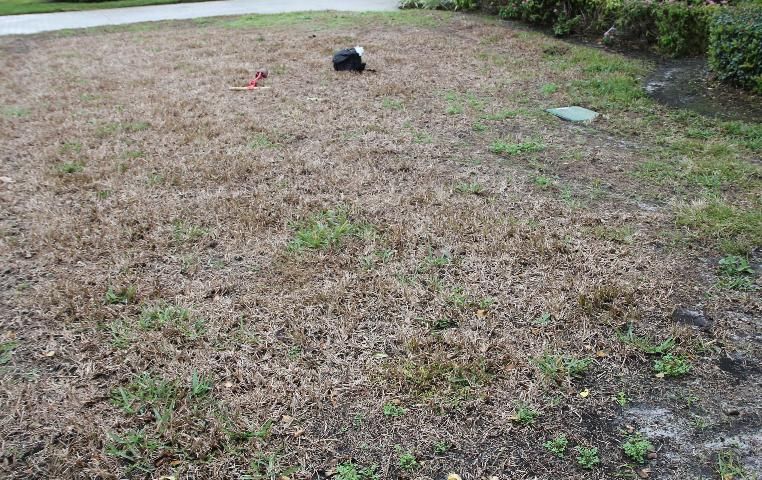

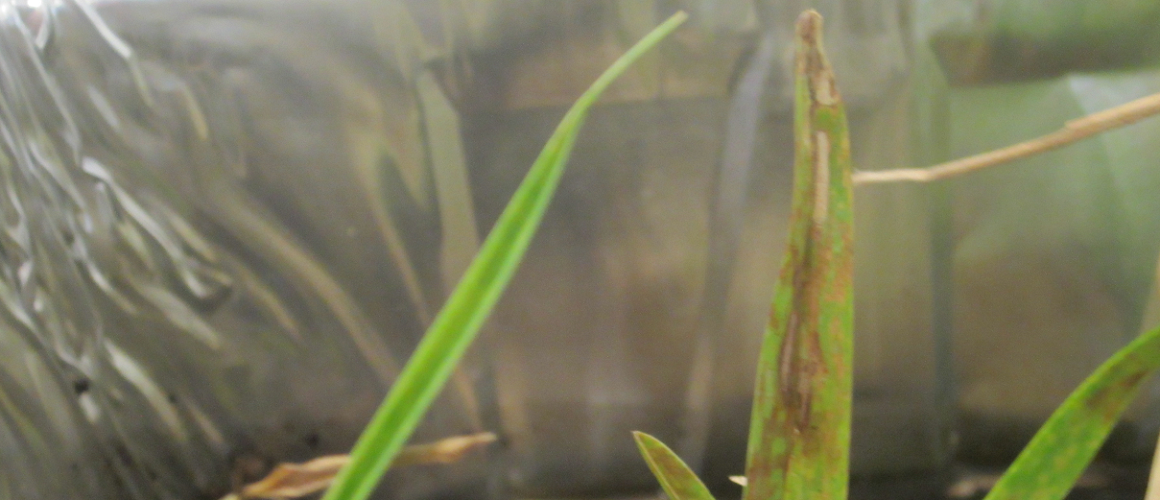
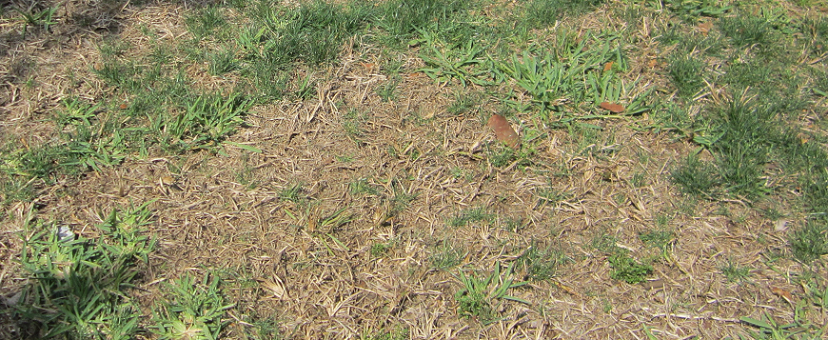
Sources: Figs 1–3 from EDIS PP313, “Mosaic Disease of St. Augustinegrass Caused by Sugarcane Mosaic Virus” by P. Harmon, UF/IFAS (edis.ifas.ufl.edu). Figs 4–6 from “What You Should Know About LVN Affecting St. Augustinegrass” by H. Mayer, UF/IFAS Extension Miami-Dade (blogs.ifas.ufl.edu). Images used for educational purposes. All rights belong to UF/IFAS.
Why SCMV Symptoms Are More Visible During Cooler Months
One of the most common questions South Florida homeowners ask is: “My lawn looked fine over the summer — why is it falling apart now?”
There are several reasons why SCMV and LVN become dramatically more visible from late fall through early spring, roughly September through March:
Floratam is a tropical grass that slows down in cool weather.
Floratam St. Augustine grows most vigorously during the warm, wet months when temperatures stay above 80°F. It thrives on heat and moisture. When temperatures drop to approximately 65°F or below — which happens regularly during South Florida’s winter, especially overnight — Floratam’s growth rate slows significantly. The grass simply cannot regenerate tissue fast enough to mask or outpace the damage the virus is causing beneath the surface.
The virus doesn’t take a season off.
While the grass slows down, the virus does not. SCMV continues to damage cells and tissue even as the plant’s ability to produce new, healthy growth declines. The result is that symptoms that were masked by rapid summer growth suddenly become visible and severe. It’s not that the virus gets worse in winter — it’s that the grass can no longer hide it.
Necrosis accelerates in cooler temperatures.
According to University of Florida researchers, when temperatures drop to around 65°F, infected Floratam begins to show more severe symptoms, including active plant death. The dieback and necrosis pattern has been consistently documented as starting in September or October, worsening through the winter, and continuing into spring.
Summer recovery is deceptive.
Some infected lawns appear to bounce back during the warm months, putting out enough new growth to cover over the damaged areas. This creates a frustrating cycle where homeowners believe the problem has resolved, only to see it return — worse than before — when the next cool season arrives. According to UF/IFAS, lawns that appear to recover eventually die over a period of one to three years regardless.
Seasonal timing catches snowbirds off guard.
Many South Florida homeowners who spend summers up north return in the fall or winter to find their lawns in unexpectedly bad shape. As one Southwest Florida garden columnist recently noted, “a lot of Marco Islanders came back to this unpleasant surprise as they returned for the season.”
In short, winter doesn’t cause SCMV — it reveals it. The cooler months strip away the grass’s ability to compensate, making the underlying viral damage impossible to overlook.
What to Look For: Identifying SCMV and LVN in Your Lawn
SCMV symptoms are progressive. Knowing what to look for at each stage can help you catch the problem early and make informed decisions.
Early Stage: Mosaic Patterns on Leaf Blades
The signature early symptom of SCMV is a mosaic pattern on individual grass blades. Look for irregular, blotchy streaks of yellow and light green on an otherwise green blade. These broken yellow streaks typically run between the veins of the leaf, creating the characteristic “mosaic” look that gives the disease its name. In the earliest stages, these patterns can be subtle and easy to dismiss as a nutrient deficiency or minor stress.
Mid-Stage: Browning, Thinning, and Patchy Dieback
As the infection progresses — particularly in Floratam — the mosaic patterns give way to necrosis. Leaf blades begin to turn brown and die prematurely. Patches of dead or thinning grass appear and expand over time. At this stage, many homeowners or lawn care companies may mistake the symptoms for a fungal disease, chinch bug damage, or drought stress, and may try fungicide treatments or increased watering, neither of which will help.
Advanced Stage: Widespread Dieback and Lawn Failure
In the advanced stage of LVN, large areas of the lawn die off completely. The turf thins out dramatically, weeds move into the bare soil, and the lawn essentially fails. This typically occurs within one to three years of initial infection, though the timeline varies. Reinstalling Floratam sod on the same site will not solve the problem — fresh Floratam placed in LVN-affected areas tends to die again within months.
What SCMV Is Not
It’s important to understand what SCMV doesn’t look like and how it behaves differently from other common lawn problems. SCMV does not spread through soil or air. It is not a fungus and will not respond to fungicides. It is not caused by insects, although aphids can transmit it. It is not a threat to pets, wildlife, or humans. And crucially, it does not affect all grass types equally — while bermudagrass, paspalum, bahiagrass, and other St. Augustine cultivars can carry the virus, only Floratam consistently progresses to the lethal stage.
What to Do Next: Your Replacement Options
Because there is no cure for SCMV or LVN, the path forward for affected Floratam lawns is replacement with a resistant cultivar. The University of Florida, UF/IFAS Extension, and turf researchers consistently recommend the following options:
Resistant St. Augustine Varieties
Palmetto® St. Augustine is currently the most field-proven replacement for Floratam in LVN-affected areas. Palmetto can become infected with SCMV, but it does not progress to Lethal Viral Necrosis — the symptoms remain mild and manageable. It has been documented surviving and thriving in lawns where Floratam has died from LVN. Palmetto is a managed, proprietary cultivar with genetic purity standards, which matters because some non-proprietary varieties can be contaminated with Floratam genetics. It has a somewhat finer texture than Floratam and may require slightly different management, particularly regarding fungal diseases. One consideration for South Florida: Palmetto can be more susceptible to chinch bugs than Floratam, so monitoring and prevention are important.
CitraBlue® St. Augustine is a newer cultivar developed by the University of Florida’s turfgrass breeding program, released in 2018. It features a distinctive blue-green color, excellent shade tolerance (among the best of any warm-season grass), strong resistance to common turf diseases including gray leaf spot, large patch, and take-all root rot, and a dense canopy that competes well against weeds. CitraBlue has shown promising resistance to LVN in field evaluations conducted at infected sites over multiple years. Large-scale community replacements, such as the installation of approximately 240,000 square feet of CitraBlue in the Valencia Palms neighborhood, have demonstrated successful results. While still undergoing final evaluation by UF, CitraBlue has rapidly become one of the most popular replacement choices in South Florida. Its slower vertical growth habit also means less frequent mowing.
Alternative Warm-Season Grasses
Zoysia Grass (varieties such as EMPIRE®, Emerald, Zeon, or Palisades) is not a known host of SCMV, making it an excellent alternative for homeowners who want to move away from St. Augustine entirely. Zoysia is drought-tolerant, durable, and handles foot traffic well. EMPIRE® Zoysia in particular is chinch bug-resistant and well-suited to Florida’s climate. Zoysia has a different look and feel than St. Augustine — it’s denser and finer-textured — and it does go semi-dormant and brown in extended cool weather, but it recovers in spring. It also requires different mowing heights and practices.
Bermudagrass varieties are another option, though bermudagrass can technically be infected by SCMV (it just doesn’t develop LVN). Bermuda thrives in full sun, tolerates heavy use, and grows aggressively. It may be a good fit for properties with full sun exposure and active outdoor use, though it requires more frequent mowing and does not tolerate shade well.
What Not to Do
Do not replace a dead Floratam lawn with more Floratam. This is the single most important piece of advice. Fresh Floratam sod installed in an area where LVN has been present will almost certainly become reinfected and die again, often within just a few months. The virus persists in the landscape through neighboring lawns, equipment, and plant material, and Floratam has no resistance to it.
Steps for Successful Resodding
If you’ve confirmed (or strongly suspect) SCMV/LVN and decide to resod, here is a general framework:
- Remove all infected grass completely using a sod cutter, shovel, or tiller.
- Test your soil to identify nutrient needs and pH balance — South Florida’s sandy soils often need amendment.
- Choose a resistant cultivar from the options above based on your property’s sun exposure, shade, traffic, and aesthetic preferences.
- Install new sod following proper practices for your chosen grass type.
- Audit your irrigation to ensure even, appropriate watering for establishment (new sod typically needs 6–8 weeks to fully root in).
- Establish an aftercare plan including appropriate fertilization, pest monitoring, and disease management for the new cultivar.
How to Get Your Lawn Tested and Assessed
If you suspect SCMV in your lawn, the first and most important step is confirmation. Visual symptoms alone are not definitive — several conditions can mimic SCMV, and the only way to be certain is laboratory testing.
Submit a sample to the UF/IFAS Plant Diagnostic Center.
The University of Florida’s Plant Diagnostic Center can test turfgrass samples for the presence of Sugarcane Mosaic Virus. Your local UF/IFAS County Extension office can also help guide you through the sample collection and submission process. In Palm Beach County, the Cooperative Extension’s horticulture team has been actively tracking the spread of SCMV and can provide local guidance.
Contact Floridist for a full lawn assessment.
If you’re in Palm Beach County and want professional, on-site evaluation, Floridist specializes in science-backed turf assessment and renovation for South Florida lawns. Their team can evaluate your property, help identify whether SCMV or another condition is at play, assess cultivar type and overall lawn health, and recommend a tailored replacement and installation plan using resistant grass varieties suited to your property’s specific conditions — including soil testing, irrigation auditing, and aftercare support.
Floridist serves communities across Palm Beach County, including West Palm Beach, Palm Beach Gardens, Jupiter, Wellington, Boynton Beach, Delray Beach, and Boca Raton. They source Florida-grown sod directly from local farms and install same-day to ensure freshness and best establishment outcomes.
To schedule a free estimate and lawn assessment, call or text Floridist at 561-941-GROW.
Prevention: Protecting Healthy Lawns
Even if your lawn currently looks healthy, prevention is critical — especially if SCMV has been confirmed in your area. Here are the measures recommended by the University of Florida:
Sanitize all lawn equipment between properties.
This is the single most important preventive measure. SCMV is primarily spread through mechanical transfer — mowers, trimmers, edgers, and even shoes can carry infected sap from one lawn to another. Remove all visible clippings and plant material from equipment, then spray down blades, decks, wheels, and shoes with a sanitizing solution. Options include diluted bleach, rubbing alcohol, quaternary ammonia products (such as Green-Shield), or commercial disinfectants like Virkon S.
Never mow wet grass.
Mowing when the turf canopy is wet — from dew, irrigation, or rain — significantly increases the risk of viral transmission. Wet sap stays viable on equipment longer and transfers more easily. Mow only when the grass is dry, ideally in the morning after dew has evaporated.
Mow at the proper height.
St. Augustine should be maintained at 3.5 to 4 inches. Cutting too short weakens the grass and creates more open wound sites where the virus can enter.
Keep mower blades sharp.
Clean cuts heal faster and leave less exposed tissue vulnerable to infection.
Mow healthy areas first.
If servicing multiple properties in an area where SCMV is known to exist, mow apparently healthy lawns before moving to symptomatic ones.
Follow best management practices for fertilization and irrigation.
A healthy, vigorous lawn is more resilient to disease pressure overall. Follow UF/IFAS guidelines for fertilization rates and timing (EDIS Publication EP221), water deeply but less frequently (applying three-quarters of an inch per session for South Florida’s sandy soils), and water in early morning so leaf blades dry when the sun comes out.
The Bottom Line
Sugarcane Mosaic Virus is not going away. It has spread across South Florida and continues to expand, and there is no treatment that can save an infected Floratam lawn. But the situation is far from hopeless. Resistant cultivars like Palmetto and CitraBlue St. Augustine — along with alternative grasses like Zoysia — offer real, proven paths to a healthy, beautiful lawn again.
The key is acting with good information. Get your lawn tested if you see symptoms. Don’t waste money on fungicides or reinstalling Floratam. And work with someone who understands the science behind what’s happening in South Florida turf.
Winter is the season that reveals SCMV for what it is. But it’s also a perfectly good season to plan — and even install — your lawn’s fresh start.
Ready to get your lawn assessed? Contact Floridist at 561-941-GROW to schedule a free estimate. Our team provides full property evaluations, soil testing, cultivar recommendations, and professional sod installation across Palm Beach County.
Rather have a pro handle it?
Floridist installs sod and treats lawns across Palm Beach County. Get a free quote in about 30 seconds, or call or text 561-941-GROW.