Sod Installation in West Palm Beach, FL
The lawn starts here — and so does the prep. Nine certified cultivars across three species, matched to your site’s actual sun, soil and use. Proper soil preparation, Florida-grown turf, and guided after-care across Palm Beach County.
Nine cultivars. Three species. One right answer for your lawn.
Start with sunlight and intended use — how many direct hours does the lawn get, and how hard will it be used? Every variety below is one we actually install in South Florida, each with its own deep-dive page covering care, cost and common failure modes. Not sure where to start? Read the best grass type for a South Florida lawn.
St. Augustine
The default South Florida lawn for good reason — a broad, soft blade that knits into a dense carpet, handles our humidity, and tolerates more shade than any other warm-season option. The trade-off is chinch bug pressure and a real need for correct mowing height.

Floratam
The South Florida workhorse. Fast to establish and thrives in wide-open sun — but it needs the full six-plus hours, and chinch bug pressure has to be managed during the warm season.
Floratam installation & care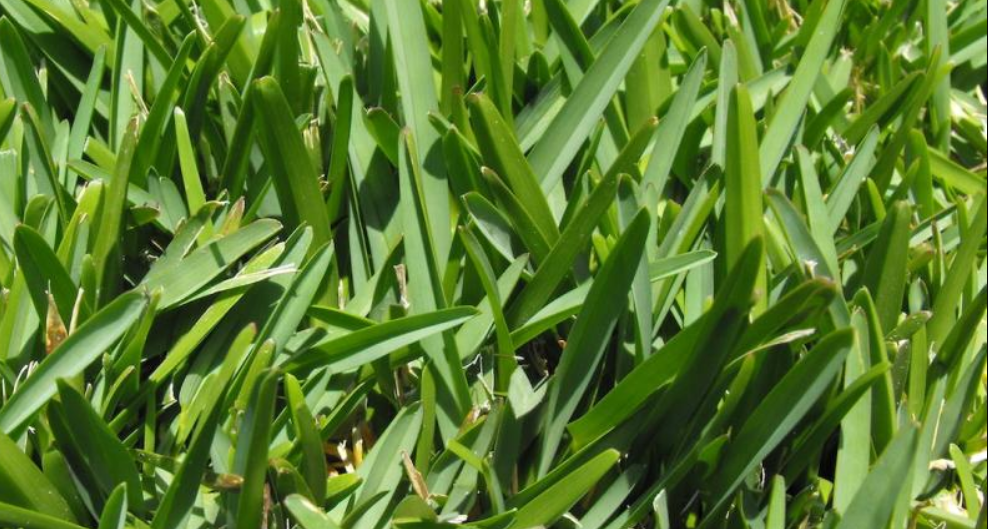
Palmetto
The safe pick for a mixed-light yard. Meaningfully better shade tolerance than Floratam with a finer, softer blade — the usual answer when part of the lawn sits under tree canopy.
Palmetto installation & care
CitraBlue
Bred at the University of Florida for disease resistance and a distinctive blue-green cast. Holds color well under inconsistent sun and grows more laterally than upright, so it fills in cleanly.
CitraBlue installation & care
ProVista
A controlled growth habit that cuts mowing frequency roughly in half once established — and it tolerates a specific over-the-top herbicide, which changes how weeds get handled entirely.
ProVista installation & careZoysia
Dense, plush turf that handles Florida heat and partial shade, with better drought resilience than St. Augustine and lower mowing frequency than Bermuda. The thick canopy suppresses weeds on its own — the trade-off is a slower establishment window and large patch pressure in cool, wet spells.
Empire
A dense, cushioned feel underfoot with strong drought tolerance and moderate growth — premium appearance without the mowing burden. Built for active households.
Empire installation & careZeon
The show-lawn Zoysia — an ultra-fine, carpet-like texture with the best shade tolerance in the species. The pick for mixed-light yards where appearance is the whole point.
Zeon installation & careCitraZoy
Bred at UF specifically for the disease environment Florida lawns actually face — large patch resistance engineered in rather than merely tolerated. Balanced color and wear tolerance.
CitraZoy installation & careBermuda
Ultra-dense, sun-loving turf with the fastest wear recovery of anything we install, plus high salt tolerance for coastal sites. It needs six to eight hours of direct sun and weekly mowing during peak growth — in shade it thins out fast. See the Bermuda care guide.
Celebration
Elite wear tolerance and the fastest recovery of any sod we install — the answer for kids, dogs and heavy foot traffic. Needs full sun and regular mowing to stay sharp.
Celebration installation & careBimini
Noticeably softer underfoot than coarser Bermuda types — comfortable barefoot and visually clean from the street, while still recovering from wear quickly. Best at lower mowing heights.
Bimini installation & careRatings reflect typical field performance in South Florida and are directional, not absolute. A site assessment confirms the right call based on actual sun hours, irrigation coverage, soil profile, and how the lawn will be used.
The right sod, the right prep, the right foundation.
Picking the variety is half the decision. The other half is everything underneath it — which is where most installations quietly fail. Here’s what we do differently.
Certified sod from licensed growers
Certified varieties from licensed Florida growers only — so the cultivar you chose above is exactly what arrives on the truck, with documented genetics and consistent field performance behind it.
Soil preparation that actually matters
Herbicide treatment, vegetation removal and soil prep, tilling, laser-guided leveling, fresh topsoil, micronutrients and amendments — calibrated by soil test, not guesswork.
Same-day cut & install
For local deliveries, harvest and installation are coordinated same-day so the sod hits the soil at peak freshness — not sitting on a pallet overnight losing moisture and rooting energy.
Guided after-care (3–4 weeks)
Watering cadence, mowing timing and early nutrition are guided through establishment — or handed to our Concierge Sod Care team to run for you. This window decides whether roots go deep or stay shallow.
Our 7-point property assessment
Before installation starts, the site gets diagnosed — and that diagnosis is what confirms the variety. This step matters most on replacement lawns: if the reason the last sod failed isn’t identified and corrected, the new turf faces the same problem from day one.
- Root-cause of past declineFor replacements, we pinpoint why the prior sod failed — chinch bugs, armyworms, gray leaf spot, take-all root rot, irrigation gaps, compaction, shade, salt, or traffic pressure. The cause gets addressed before installation so the same problem doesn’t repeat.
- Precise measurementExact square footage for sod, topsoil, and materials, accounting for cuts, odd shapes, and a light waste factor to avoid surprise overages at delivery.
- Soil profile & chemistryTexture, compaction, organic matter, and pH (target ~6–7) guide the herbicide plan, amendments, micronutrients, and establishment program. Why soil type matters.
- Irrigation coverage & pressure checkZones are run to verify head-to-head coverage, zone performance, and run times. New roots that miss water in the first two weeks don’t recover. Any gaps are clearly noted in the project scope.
- Grade & drainage risksLow spots, thatch pockets, hardpan, and poor fall that pools water and suffocates young roots are identified and itemized in the leveling scope.
- Access & logisticsGate width, slopes, pallet and soil staging, nearby parking, and surface protection determine crew approach and keep the site tidy throughout the job.
Every finding rolls into a transparent proposal — prep, materials, sod variety, and after-care — so there are no surprises in what’s being done or why.
The installation process, step by step
Full-scale renovations typically wrap in 1–2 weeks depending on weather and site access. Smaller projects often move faster. For local deliveries, sod is cut and installed the same day to maximize freshness and minimize stress before rooting begins.
-
Site walk, variety selection & quote ~1 hr
On-site walk-through, measurements, and a clear scope with options. This is where the cultivar decision gets made against real sun readings rather than a guess. Anything that could affect outcomes or budget gets flagged upfront — not after the job starts.
-
Vegetation control & removal 7–10 days
A systemic treatment moves from the leaves down into the roots and underground runners to stop regrowth at the source. Seven to ten days are allowed for full translocation and die-back before the dead material is scalped and bagged. More on removal & soil prep and whether existing grass has to come out.
-
Soil preparation 1–2 days
Deep tilling and scarifying relieve compaction and open pathways for air and water. Fresh topsoil is blended in where needed to correct low spots and improve drainage. Soil testing guides the micronutrient and amendment applications. This is the step that separates a lawn that thrives from one that just survives — and the one most often skipped.
-
Sod delivery & install 1–2 days
Same-day harvest and installation for local deliveries, tight seams with staggered joints, a roller pass for soil contact, and a thorough initial watering-in. See how sod is laid properly and the mistakes that cost lawns.
-
Guided after-care 3–4 weeks
Watering cadence, mowing height and timing, and first nutrition are guided through the establishment window. Prefer it handled entirely? Hand it to Concierge Sod Care.
Timelines can shift with weather, access, and scope — including seasonal timing and Palm Beach County fertilizer blackout dates. Updates are provided at each step.
Get a ballpark before the site visit
A fast, non-binding planning range based on typical site conditions. Most residential projects start around $2,400 for sites under ~1,500 sq ft. Pick the cultivar you’re leaning toward and the result links straight to its page. For the full picture, read what sod installation costs in South Florida in 2026.
Area
Length × Width auto-calculates when both fields are filled in.
Grass & Preparation
Add-ons (optional)
These typically apply during full renovations — leave unchecked for straightforward sod swaps. See removal & soil prep for what each involves.
Assumes typical site conditions and species-level material rates — cultivar-specific pricing is confirmed on site. The final proposal itemizes prep, materials, and logistics. Larger or non-residential projects: see commercial installation, HOA installation, or athletic fields.
Installation is one piece. Here’s the rest.
Residential sod installation sits at the center of a wider program — the prep that comes before it, the care that comes after, and the specialized versions for communities, businesses and sports fields.
Removal & Soil Prep
Systemic vegetation control, scalping, hauling, deep tilling and laser-guided leveling — the foundation work that determines whether the new lawn roots or struggles.
Concierge Sod Care
We run the first 90 days for you — irrigation tuning, mowing on schedule, and timed nutrition matched to your variety and the season. Most new lawns fail because after-care slips.
Soil Testing
pH, texture, organic matter and nutrient profile — the data that sets the amendment plan instead of a generic bag of starter fertilizer.
HOA Installations
Compliance-driven re-sods that match community turf standards, coordinated around board deadlines and violation notices — so a letter turns into a scheduled fix, not a fine.
Commercial Installation
Multi-phase installs for property managers, developers and commercial campuses — scheduled around tenants, traffic and opening dates.
Athletic & Sports Fields
Bermuda-based field builds with the grading tolerances, root-zone depth and drainage a playing surface actually requires — not a residential install scaled up.
Facing an HOA notice? Start with what to do when your HOA asks you to re-sod. Building a field? See athletic field soil prep. Already have a lawn in the ground and just want it healthier? Our ongoing lawn treatment programs cover fertilization, fungus, pests and aeration.
Sod installation FAQs
Straight answers to the questions that come up most. Anything not covered here gets addressed during the on-site assessment.
Which variety should I actually pick?
Sunlight decides it first, then how the lawn gets used.
- 6+ hrs sun, heavy traffic: Celebration or Bimini Bermuda.
- 6+ hrs sun, budget-conscious: Floratam.
- Mixed sun and shade: Palmetto, CitraBlue, or Zeon Zoysia.
- Premium look, less mowing: Empire Zoysia or ProVista.
- Disease history on the property: CitraZoy or CitraBlue.
The comparison above covers all nine side by side, and the site assessment confirms the call with real light readings.
How accurate is the calculator?
It’s a planning range, not a final quote, and it uses species-level material rates — individual cultivars within a species can differ. Actual pricing shifts based on prep depth, grading requirements, site access, irrigation coverage gaps, disposal scope, and any amendments the soil needs. For a fuller breakdown, see 2026 sod installation costs in South Florida.
What does the watering schedule look like after installation?
A tailored schedule is provided based on the specific irrigation layout, pressure, head spacing, sun exposure, and soil type. A typical pattern looks like this:
- Days 1–7: Short, frequent cycles to keep the sod and topsoil consistently moist — not flooded, not drying out between runs.
- Days 8–14: Frequency drops and duration increases to push roots deeper into the soil profile.
- Weeks 3–4: Transition toward a normal schedule based on the season and any local restrictions.
Run times are set to avoid runoff and overwatering — both common causes of washout and fungal pressure in Florida. Full detail: watering new sod.
When does the first mow happen?
Typically 10–14 days after installation, once the sod is firmly rooted and resists a firm tug — see how long sod takes to root and when to mow new sod. Sharp blades only, no scalping, and no more than one-third of the leaf blade removed in a single cut. Correct height varies by variety — here are the recommended mowing heights.
Do you offer a guarantee?
We stand behind the preparation and installation work and include guided after-care through the first 3–4 weeks of establishment to support rooting. If something looks off during that window, we’ll diagnose quickly and advise on corrections. For hands-off coverage of the full establishment period, Concierge Sod Care takes it over entirely. Full terms are provided with the proposal.
We’re replacing dead sod — will the underlying cause get fixed first?
Yes. Before new sod goes down, the root cause gets identified and addressed — irrigation coverage gaps, compaction, poor drainage, shade stress, chinch bugs, or disease. Installing fresh sod on top of an unresolved problem just repeats the failure on a new timeline — here’s why new sod dies.
Where disease is the cause, the variety recommendation usually changes too — a resistant cultivar like CitraZoy or CitraBlue is often the better replacement.
Which varieties handle shade best?
Moderate shade: Palmetto and CitraBlue St. Augustine, and fine-bladed Zeon Zoysia, typically perform best with a few hours of filtered light.
Full sun only: Bermuda hybrids thrive in full sun but decline quickly in shade.Shade tolerance depends on actual daily light hours and canopy openness, confirmed during the site assessment. More: best sod for shaded lawns.
Is the sod cut and installed the same day?
Whenever possible, yes. Fresh sod establishes faster, shrinks less, and handles stress better than sod that’s been sitting. Harvest windows are coordinated with delivery and installation to keep it as fresh as possible.
When can the lawn be walked on? What about pets?
Keep traffic as light as possible for the first 7–10 days — details here: walking on new sod. Normal use typically resumes around the 2–3 week mark once rooting is established. Pets are fine — just avoid letting them rut saturated areas. For dog-heavy yards, a fast-recovering Bermuda like Celebration handles the wear best.
Do you remove old sod and haul everything away?
Yes — removal and hauling are included when they’re part of the proposal scope. Existing turf, weeds, and debris are cleared to create a clean surface for proper grading and sod-to-soil contact. No old material gets buried underneath. See removal & soil prep and whether removal is always necessary.
Sites with unusually heavy debris, prior rock or landscaping material, or difficult access get called out specifically during the assessment.
How is the ground prepped before new sod goes down?
Prep is the most important part of a successful installation — and the most commonly skipped. Depending on the site, this typically includes grading and leveling, correction of low spots, thatch and debris removal, and soil conditioning to ensure strong sod-to-soil contact throughout. It’s guided by soil testing rather than assumption.
Irrigation coverage is verified as part of prep — because a lawn that roots well in some zones and stresses in others isn’t a success, it’s a partial failure waiting to show up.
Does the new sod get fertilized?
Yes — establishment nutrition is part of the plan, tailored to the season and local regulations. When nitrogen is appropriate, a starter program supports rooting. During Palm Beach County blackout periods, the approach shifts to UF/IFAS-compliant options: potassium support, soil conditioners, and wetting polymers as the site requires.
Will the irrigation system be checked?
Yes. Every zone gets run to check for coverage gaps, broken or misaligned heads, overspray, and runoff. Establishment success depends heavily on uniform coverage — problems get flagged early and recommendations are made before or immediately after installation, not after the lawn shows signs of stress.
Serving Palm Beach County
Same crews, same prep standards, same certified growers — across the county.
Palm Beach County
Where we install
We handle sod projects throughout Palm Beach County, including Jupiter, West Palm Beach and Boca Raton. See the full list of cities on our sod installation service areas page.
Ready to do this right?
A transparent proposal with the correct prep, the right cultivar for your actual sun and soil, and a plan that holds up long after the last piece is laid.