
Award-Winning, Full-Service Sod Installation in Palm Beach County
The Lawn Starts Here. So Does the Prep.
Proper soil prep. Certified turf. Guided after-care. A lawn that looks great on day one — and actually holds up long after.
Why homeowners choose us
The right sod, the right prep, the right foundation.
Certified turf sources, thorough soil prep, and a guided after-care program — so the lawn roots properly, looks great early, and keeps improving instead of declining.
Certified sod from licensed growers
Certified varieties from licensed Florida growers only — so what gets installed matches exactly what was specified, with documented genetics and consistent field performance behind it.
Soil preparation that actually matters
Herbicide treatment, vegetation removal and scalping, tilling, laser-guided leveling, fresh topsoil, micronutrients, and soil amendments — all calibrated to the specific lawn for faster rooting and consistent, long-lasting color.
Same-day cut & install
For local deliveries, harvest and installation are coordinated same-day so the sod hits the soil at peak freshness — not sitting on a pallet overnight losing moisture and rooting energy.
Guided after-care (3–4 weeks)
Watering cadence, mowing timing, and early nutrition are guided through the first 3–4 weeks of establishment — the window that determines whether the lawn roots deep or stays shallow and stressed.
WHAT WE LOOK FOR
Our 7-Point Property Assessment
Before installation starts, the site gets diagnosed. This step matters most on replacement lawns — if the reason the last sod failed isn’t identified and corrected, the new turf faces the same problem from day one.
- Root-cause of past decline — For replacements, we pinpoint why the prior sod failed — chinch bugs, armyworms, gray leaf spot, take-all root rot, irrigation gaps, compaction, shade, salt, or traffic pressure. The cause gets addressed before installation so the same problem doesn’t repeat.
- Precise measurement — Exact square footage for sod, topsoil, and materials, accounting for cuts, odd shapes, and a light waste factor to avoid surprise overages at delivery.
- Soil profile & chemistry — Texture, compaction, organic matter, and pH (target ~6–7) guide the herbicide plan, amendments, micronutrient applications, and establishment program. No guessing on what goes into the ground.
- Irrigation coverage & pressure check — Zones are run to verify head-to-head coverage, zone performance, and run times. New roots that miss water in the first two weeks don’t recover. Any gaps are clearly noted in the project scope.
- Existing lawn, weeds & vegetation — Species identification and density guide the systemic treatment plan, removal method, and scalping approach for a clean soil interface before new sod goes down.
- Grade & drainage risks — Low spots, thatch pockets, hardpan, and poor fall that pool water and suffocate young roots are identified and itemized in the leveling scope.
- Access & logistics — Gate width, slopes, pallet and soil staging, nearby parking, and surface protection determine crew approach and keep the site tidy throughout the job.
Every finding rolls into a transparent proposal — prep, materials, sod variety, and after-care — so there are no surprises in what’s being done or why.
What to expect
The Installation Process, Step by Step
Full-scale renovations typically wrap in 1–2 weeks depending on weather and site access. Smaller projects often move faster. For local deliveries, sod is cut and installed the same day to maximize freshness and minimize stress before rooting begins.
-
Site walk & quote ~1 hr
On-site walk-through, measurements, and a clear scope with options. Anything that could affect outcomes or budget gets flagged upfront — not after the job starts.
-
Vegetation control & removal 7–10 days
A systemic treatment moves from the leaves down into the roots and underground runners to stop regrowth at the source. Seven to ten days are allowed for full translocation and die-back before the dead material is scalped and bagged — so new sod meets clean, weed-free soil instead of buried competition.
-
Soil preparation 1–2 days
Deep tilling and scarifying relieve compaction and open pathways for air and water. Fresh topsoil is blended in where needed to correct low spots and improve drainage. Soil testing guides the micronutrient and amendment applications — calibrated to the specific soil chemistry and site conditions for faster rooting and long-lasting, even color. This is the step that separates a lawn that thrives from one that just survives.
-
Sod delivery & install 1–2 days
Same-day harvest and installation for local deliveries, tight seams with staggered joints, a roller pass for soil contact, and a thorough initial watering-in. Every step matters here — seams and edges that dry out in the first week rarely recover cleanly.
-
Guided after-care 3–4 weeks
Watering cadence, mowing height and timing, and first nutrition are guided through the establishment window — then a straightforward plan is handed off to keep the momentum going.
Timelines can shift with weather, access, and scope. Updates are provided at each step so there are no surprises.
Choosing your grass
Which Florida grass is right for your lawn?
Start with sunlight and intended use — how many direct hours does the lawn get, and how hard will it be used? The varieties below are what we install in South Florida, with field-tested guidance on where each one actually works.
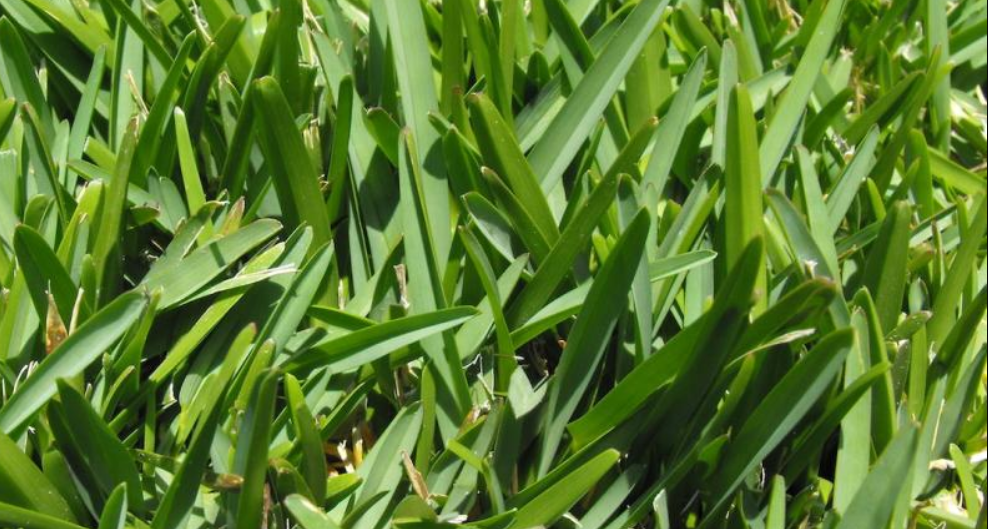
Palmetto
Solid all-around performer with meaningfully better shade tolerance than Floratam.

Floratam
Thrives in full sun — keep an eye on chinch bug pressure during the warm season.

CitraBlue
Holds color well under mixed light — a strong choice for properties with inconsistent sun exposure.

ProVista
Controlled growth habit means mowing frequency can drop over time — a real practical advantage.
EMPIRE (most popular)
Built for active households — watch for large patch during cool, wet periods.
Innovation
Fine-bladed and dark — looks sharp with a well-maintained cut.
Zeon
Excellent in partial shade — one of the better-looking fine-bladed options for residential use.
CitraZoy
Balanced performance, solid color, and good wear tolerance — a well-rounded modern option.
Palisades
Upright growth habit handles heat and dry spells well — a reliable performer in challenging conditions.
Celebration
Elite wear tolerance and fast recovery from damage — needs full sun and regular mowing to stay sharp.
Latitude 36
Athletic-field genetics — stripes beautifully with sharp blades and proper mowing height.
Tifway 419
Aggressive grower — thatch builds fast, so sharp and frequent cuts are non-negotiable.
Bimini
Recovers from wear quickly — looks its best kept at lower mowing heights.
Ratings reflect typical field performance in South Florida. A site assessment confirms the right call based on actual sun hours, irrigation coverage, soil profile, and how the lawn will be used.
Quick estimate
Get a ballpark before the site visit
A fast, non-binding planning range based on typical site conditions. Final pricing is confirmed after an on-site assessment where prep scope, soil profile, access, and the specific variety are evaluated.
Area
Length × Width auto-calculates when both fields are filled in.
Grass & Preparation
Add-ons (optional)
These typically apply during full renovations — leave unchecked for straightforward sod swaps.
Assumes typical site conditions. The final proposal itemizes prep, materials, and logistics after the on-site assessment confirms actual scope.
Questions we get most
Sod installation FAQs
Straight answers to the questions that come up most. Anything not covered here gets addressed during the on-site assessment.
-
How accurate is the calculator?
It’s a planning range, not a final quote. Actual pricing shifts based on prep depth, grading requirements, site access, irrigation coverage gaps, disposal scope, and any amendments the soil needs. The final number is confirmed after an on-site assessment that verifies square footage, soil profile, irrigation performance, and logistics.
-
What does the watering schedule look like after installation?
A tailored schedule is provided based on the specific irrigation layout, pressure, head spacing, sun exposure, and soil type. A typical pattern looks like this:
- Days 1–7: Short, frequent cycles to keep the sod and topsoil consistently moist — not flooded, not drying out between runs.
- Days 8–14: Frequency drops and duration increases to push roots deeper into the soil profile.
- Weeks 3–4: Transition toward a normal schedule based on the season and any local restrictions.
Run times are set to avoid runoff and overwatering — both of which are common causes of washout and fungal pressure in Florida.
-
When does the first mow happen?
Typically 10–14 days after installation, once the sod is firmly rooted and resists a firm tug. Sharp blades only — no scalping, and no more than one-third of the leaf blade removed in a single cut.
-
Do you offer a guarantee?
We stand behind the preparation and installation work and include guided after-care through the first 3–4 weeks of establishment to support rooting. If something looks off during that window, we’ll diagnose quickly and advise on corrections. Full terms are provided with the proposal.
-
We’re replacing dead sod — will the underlying cause get fixed first?
Yes. Before new sod goes down, the root cause gets identified and addressed — whether that’s irrigation coverage gaps, compaction, poor drainage, shade stress, pest pressure, or disease. Installing fresh sod on top of an unresolved problem just repeats the failure on a new timeline.
-
Which varieties handle shade best?
Moderate shade: St. Augustine varieties (CitraBlue, Palmetto, ProVista) and fine-bladed Zoysia (Zeon) typically perform best with a few hours of filtered light.
Full sun: Bermuda hybrids and most Zoysias thrive in full sun but decline quickly in shaded conditions — some varieties faster than others.Shade tolerance depends on actual daily light hours and canopy openness. This gets confirmed during the site assessment.
-
Is the sod cut and installed the same day?
Whenever possible, yes. Fresh sod establishes faster, shrinks less, and handles stress better than sod that’s been sitting. Harvest windows are coordinated with delivery and installation to keep it as fresh as possible.
-
When can the lawn be walked on? What about pets?
Keep traffic as light as possible for the first 7–10 days. Normal use typically resumes around the 2–3 week mark once rooting is established. Pets are fine — just avoid letting them rut saturated areas and keep watering consistent so high-traffic paths don’t create low spots that set in permanently.
-
Do you remove old sod and haul everything away?
Yes — removal and hauling are included when they’re part of the proposal scope. Existing turf, weeds, and debris are cleared to create a clean surface for proper grading and sod-to-soil contact. No old material gets buried underneath.
Sites with unusually heavy debris, prior rock or landscaping material, or difficult access get called out specifically during the assessment.
-
How is the ground prepped before new sod goes down?
Prep is the most important part of a successful installation — and the most commonly skipped. Depending on the site, this typically includes grading and leveling, correction of low spots, thatch and debris removal, and soil conditioning to ensure strong sod-to-soil contact throughout.
Irrigation coverage is verified as part of prep — because a lawn that roots well in some zones and stresses in others isn’t a success, it’s a partial failure waiting to show up.
-
Does the new sod get fertilized?
Yes — establishment nutrition is part of the plan, but it’s tailored to the season and local regulations. When nitrogen is appropriate, a starter program supports rooting. During blackout periods, the approach shifts to UF/IFAS-compliant options: potassium support, soil conditioners, and wetting polymers as the site requires.
-
Will the irrigation system be checked?
Yes. Every zone gets run to check for coverage gaps, broken or misaligned heads, overspray, and runoff. Establishment success depends heavily on uniform coverage — problems get flagged early and recommendations are made before or immediately after installation, not after the lawn shows signs of stress.
Ready to do this right?
A transparent proposal with the correct prep, the right grass for the site, and a plan that holds up after installation.